
COVID-19: An in-depth Analysis with India's leading Diabetologist and Thought Leader, Dr Shashank Joshi
COVID-19: An in-depth Analysis with India's leading Diabetologist and Thought Leader, Dr Shashank Joshi
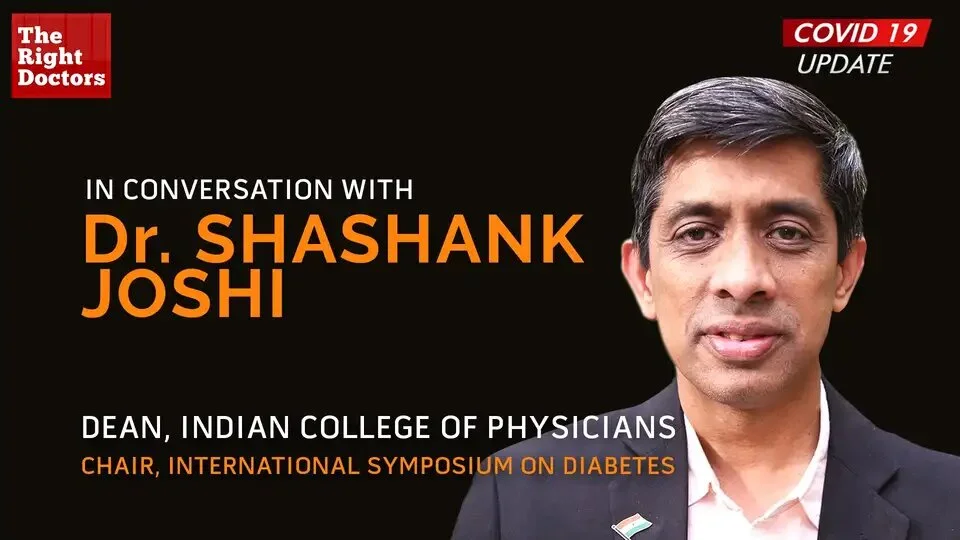
Dr. Shashank Joshi
Senior Consultant Endocrinologist
Diabetologist, Lilavati Hospital, Mumbai
UPDATED: Feb 23, 2021, 1:05:55 PM
Highlights
- COVID-19 has a lower mortality rate.
- Elderly population who have underlying diseases like chronic obstructive pulmonary disease, diabetes, hypertension, heart disease, are more susceptible to COVID-19
- COVID-19 is not the most contagious disease
- Person suffering from cardiovascular metabolic disease, hypertension and diabetes does not do very well in the COVID positive cases
Nikhitha Chowdary and Swati Joshi from TheRightDoctors.com spoke to the Dean of the Indian College of Physicians and Chair of International Symposium on Diabetes (IDSi), Dr Shashank Joshi on the COVID-19 pandemic.
With the number of COVID-19 cases nearing 900 in India, there are a lot of rumours about the pandemic. Social media is flooded with outlandish suggestions and remedies to cure COVID-19. TheRightDoctors.com spoke to the Dean of the Indian College of Physicians and Chair of IDSi, Dr. Shashank Joshi for an in-depth analysis of the Coronavirus bug; its genesis, tests, treatment and myths.
Understanding COVID-19
Coronavirus is a very old virus but the current coronavirus is because of a 2019 novel coronavirus SARS-2, says Dr Shashank Joshi. According to Dr Joshi, coronavirus causes symptoms like fever, cough, shortness of breath which leads to pneumonia, which can cause ARDS.
"Coronavirus originated in Wuhan, China and spread globally. It is believed to come from an animal host like a zoonotic disease. Currently human to human transmission of coronavirus is occurring. There is no vaccine for this virus. It is under investigation and some antivirus therapies have empirically shown to work," says Dr Joshi.
Coronaviruses are animal viruses that were discovered in the 1930s. Explaining the origin of coronavirus Dr Joshi says that the first human COVID- 19 virus was discovered in Salisbury in the United Kingdom.
"Coronavirus is nothing but RNA virus and these RNA viruses have a protein on the surface of them. There are two types of proteins, one is the spike protein (S protein), which is binding the host cell receptor so that they can enter the host, the other one is the nucleocapsid protein (N protein). The N-protein is bound to the RNA genome which makes a nucleocapsid. Another protein called the E-protein, is the envelope-protein. Whatever testing is now done for coronavirus is on the E-protein which interacts with the M protein, a membrane protein. The M-protein is nothing but the central organizer of the Coronavirus assembly and determines the shape of the corona envelope", he elaborates.
Explaining COVID-19 in scientific terms Dr. Joshi says, “These are various proteins which fundamentally bind through a receptor and this receptor is nothing but the phase II receptor, the angiotensin II receptor. This human angiotensin-converting enzyme II is present in the lungs and when it binds it can release a lot of cytokines through a cytopathic effect. These cytokines lead to Acute Respiratory Distress Syndrome (ARDS).”
SARS, MERS and COVID-19
The viruses from camels and bats went to the civet cats and then to humans. Severe Acute Respiratory Syndrome (SARS) came from that in 2002 and in 2003. “We were able to conquer SARS. Middle East Respiratory Syndrome (MERS) in South Arabia in 2012 came from the dromedary camels to humans,” says Dr Joshi.
Dr Joshi emphasizes that fatality in SARS was 9.6%, almost 1 in 5 doctors or healthcare workers who took care of the patients died whereas MERS only had 2400 cases reported and around 800 people died which shows that fatality was much higher in SARS and MERS.
Drawing a comparison of MERS and SARS with the COVID virus, Dr Joshi says, “COVID-19 has a lower mortality rate. Though there are more than a lakh patients and a lot of casualties the mortality is around 2 to 3%.”
Challenges
“Elderly population who have underlying diseases like chronic obstructive pulmonary disease, diabetes, hypertension, heart disease, are more susceptible to COVID-19,” says Dr. Joshi. The other challenge is that this virus spreads from two primary routes, one is an airborne droplet and the second is a surface and it is very important to recognize that the virus survives on surfaces explains Dr Joshi.
“The droplets are around five microns and they can survive on various surfaces like the aerosol or in the aerosolized area for around three hours, in copper for around four hours, on wooden benches for around 24 hours and on plastic and steel for two to three days. “Coronavirus has two strains. one is the L-strain which is a virulent strain and the other one is an S-strain which is a milder variant,” says Dr Joshi.
It is a myth that only elderly people are affected by the virus, emphasizes Dr Joshi. “In the United States, a lot of young people also got severe disease whereas, in Italy, the virus majorly affected senior citizens."
The coronavirus essentially came by import,” says Dr Joshi. The virus spreads when people are in touch with somebody who coughs or sneezes or it is in the aerosol or indirect contact of surfaces where the patient was. “The symptoms of COVID-19 are fever, breathing difficulties, cough, shortness of breath, occasional gastrointestinal symptoms like diarrhoea, pneumonia and ARDS or respiratory syndrome. Rarely people get kidney failure,” says Dr. Joshi.
How contagious is COVID-19
“It is not the most contagious disease. We have contained more contagious diseases like smallpox and polio where the RO which means one person can infect around five to seven individuals, mumps infected around five to seven individuals. Measles is the most infectious, with one measles human beings can infect almost 20 individuals. The COVID, Influenza or Ebola is around 2 to 3 individuals,” says Dr. Joshi.
He emphasizes that similar viruses have been there in the past like the H1N1, the swine flu, Ebola, Hendra, the Hantavirus which were conquered. Even the fastest spreading viruses like measles and chickenpox were handled.
“Coronavirus is a slow spreader with an incubation period of up to 14 days, which is why our Prime Minister advised for a 21-day lockdown. The PM wants to flatten the curve of the virus,” says Dr. Joshi. Coronavirus is more deadly while bird flu, Ebola, MERS, smallpox, Spanish flu, SARS are much more deadly compared to the current virus but L-strain of this virus can be more detrimental, explains Dr. Joshi.
Myths around COVID19
Dr. Joshi says there are many myths about coronavirus like, “Can hand dryers kill the virus? The answer is no. Can UV lamps kill the virus? The answer is no. Can thermal scanners be effective in controlling the virus? No. Coronavirus is sensitive to high temperature. Can spraying chlorine kill the virus? No. Can pets at home have the virus? The answer is no. If we give a pneumonia vaccine, will it help to treat the virus, the answer is no and if we clean the nose because like in the common cold when we do rinse the nose, will it help the virus? The answer is no. If we eat garlic, will it prevent virus infection? The answer is no. Are older people more susceptible? Yes, they are. Are antibiotics able to cure? No, they will lower the immunity.” According to Dr. Joshi, the myths about COVID-19 are a very serious concern.
How can we reduce the risk of Corona infection?
“Be clean, be clean, be clean. Clean your hands, mouth, eyes, and your body, take a bath twice a day with soap and water or if you are outside and you do not have access to soap and water then use an alcohol base, sanitizer. Always cover your nose and mouth while coughing or sneezing with a tissue or a flexed elbow. Try to avoid close contact with anyone with a cough or cold, like flu-like symptoms and avoid contact with wild or farm animals,” emphasizes Dr Joshi.
“From the percentage of infectivity, this virus needs to be contained and the only way we can contain this virus is through isolation,” says Dr. Joshi. There is a new term called social distancing which means that we should stay at home and distance ourselves, do not get in touch with other people, then we will be able to contain the virus before it goes into the stage three where community outbreak can occur and that is very important for us to recognize, explains Dr. Joshi.
Testing COVID-19
“The testing for COV1D-19 is a molecular biology test or an artificial test. Antigen-antibody tests have not been permitted; they can be done but they are not being done in this particular population. If the test comes positive then again, we get three-four types of disease. The first disease which we get when we get in contact with somebody with the Coronavirus can be classified into A, B and C. A is mildly symptomatic with no likely escalation, the simple treatment for that just gives some Hydroxychloroquine under medical supervision. With B category we are dealing with comorbidities and mild symptoms due to moderate disease and C is a critical disease where a pulse oximeter is needed, you see a saturation drop, the respiratory rate goes up and then this patient needs hospitalization,” explains Dr Joshi.
Singapore followed a model where they hospitalized type C patients and keep them under care. The reason our prime minister has decided for social distancing is because he is trying to reduce the transmissibility of the virus, tells Dr Joshi.
“The R0 of this virus is 1.5 to 3 days and if there is social distancing with good social hygiene, the R0 will go below 1 and that is something which we need to recognize very well. In the vulnerable group, i.e. senior citizens above 65, hypertensive diabetics, cancer patients, or people who are taking treatment need to be very careful,” emphasizes Dr Joshi.
“If people get symptomatic with moderate to severe symptoms then they should contact the local hospital and ask for treatment. We need to give oxygenation, hydration, symptomatic treatment, antimicrobial therapy, antiviral therapy, and even a ventilator may be required and sometimes immunomodulators are required which is for the doctors to decide,” says Dr Joshi.
COVID-19: The Treatment
“Ritonavir/lopinavir combination did not do very well in severe cases. There is a very popular drug Chloroquine/Hydroxychloroquine. Patients should not take it by themselves to prevent the disease. Doctors should also not take it to prevent the disease."
"If doctors are treating a COVID positive or COVID suspected cases, where they are handling blood and body fluids, they need to be given, randomized trial on the chemoprophylaxis,” explains Dr. Joshi. He says that Chloroquine or Hydroxychloroquine can prolong the QT interval and can have deleterious side effects on the retina. One needs to be very careful. He says that a lot of new drugs are being investigated and in time, these studies will through up other treatment options.
Diabetes and COVID-19
“Diabetes is one of the risk factors and if it is poorly controlled then we can have a challenge,” says Dr Joshi. He shares that a person suffering from cardiovascular metabolic disease, hypertension and diabetes does not do very well if tested COVID-19 positive and they can go into the ICU. "If somebody is a senior citizen with diabetes or hypertension then they need to be more vigilant and, in those individuals, need to control the glucose tightly".
“We need to ensure that there are adequate stocks and supplies. We need to tell people to stay at home. We need to tell people to wash their hands with soap and water regularly for at least 20 seconds and ensure that they appropriately follow cough and sneeze etiquette. They should not touch their eyes, mouth, and nose if possible and if they get a fever, cough, shortness of breath or wheezing then they should rush to the hospital,” urges Dr Joshi.
The American Diabetic Association has come out with guidelines that there is nothing to panic or worry but has advised that adequate stocks should be maintained. A patient with diabetes gets more complications and the risk is similar for type I and type II but there should be adequate insulin supplies.
“COVID-19 positive cases; 80% of them will have mild disease. There is symptomatic treatment with Hydroxychloroquine and azithromycin as a protocol which is available but the drugs should not be given over-the-counter, they should not be given by GPs, they have to be given under expert medical supervision where teams are capable of handling the COVID-19 problems and very few cases, which are high risk, may need hospitalization, ICU care and ventilation,” says Dr Joshi.
Dr Shashank Joshi believes that the 21 days lockdown by the PM is a very smart decision. "It should be able to break the chain of the virus, flatten the curve so that we will be able to mitigate the cycle from stage 2 to stage 3 and the community spread which was impending on India that could have killed a lot of individuals" he observes.



Most Popular
7 FDA Lung Cancer Approvals in 24 Months Every Doctor Should Know
Dr. Chandra Sekhar
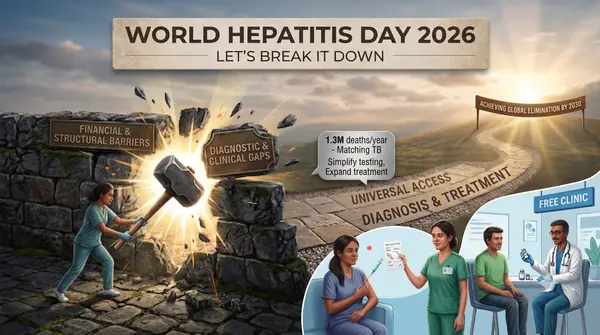
Addressing Healthcare Barriers on World Hepatitis Day 2026

Restructuring Macronutrient Ratios Checks Indian Diabetes
What Nobody Tells You After a Lung Cancer Diagnosis
Dr. Chandra Sekhar

Dr. Peter Schwarz Outlines IDF Strategies for Global Diabetes Crisis

Dr. Enas A. Enas: Targeted Screening Essential to Stop Early Indian CA
Dr Chandrashekhar: Image Fat Depot Phenotypes | WCCKMM 2026

Dr V Mohan Outlines Precision Medicine to Subdivide Indian Diabetes
Powered by:
.png)
Awards & Recognitions:


Comments(4)