
Jul 18, 2026
WDHD: Ultra-Processed Diets Drive Global IBS Surge
WDHD: Ultra-Processed Diets Drive Global IBS Surge
Web Desk
UPDATED: May 29, 2026, 7:44:38 PM
Highlights
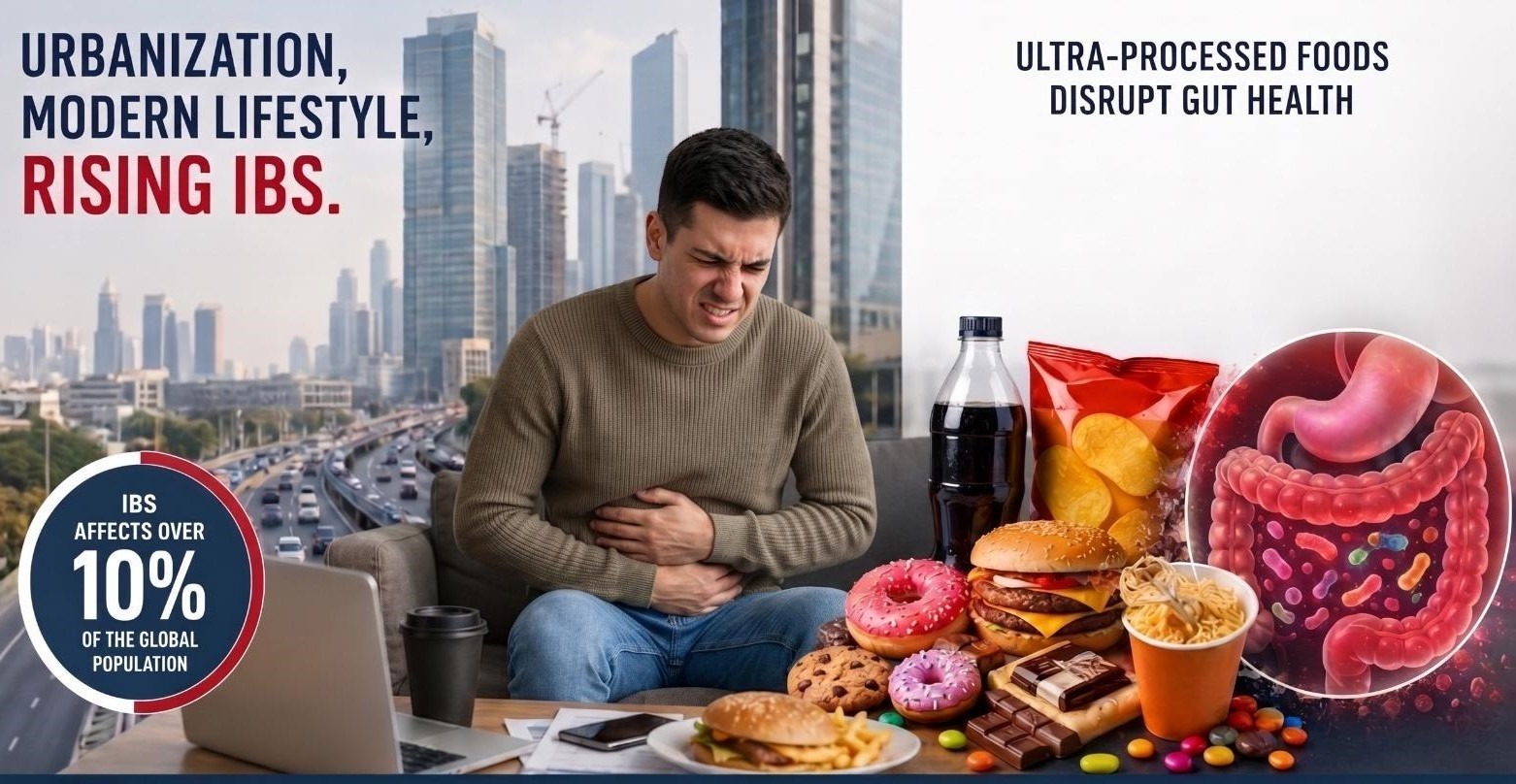
The epidemiological landscape of gastroenterology is shifting rapidly in line with global urbanisation, with metabolic and functional bowel disorders expanding across regions that historically reported low disease baselines. This structural transition highlights a profound mismatch between modern lifestyles and human gastrointestinal physiology, with clinical centres recording unprecedented patient volumes presenting with complex, overlapping functional gastrointestinal symptoms.
As World Digestive Health Day 2026 continues to spotlight digestive disease, urban areas are experiencing a distinct spike in IBS presentations. Data from the World Gastroenterology Organisation shows that historical community estimates hovering around 7% have given way to current urban prevalence rates exceeding 10% — a rapid expansion that is outpacing public health awareness and taxing existing specialist infrastructure.
Dr. Uday Ghoshal, Professor of Gastroenterology at SGPGI Lucknow, stated: "What we are witnessing in urban gastroenterology clinics across India is a functional bowel epidemic driven entirely by lifestyle. The gut microbiome of a working professional in Delhi today looks nothing like it did a generation ago — and IBS is the clinical consequence."
A landmark study in The BMJ confirms that ultra-processed foods account for over 50% of total caloric intake in several nations. These manufactured products are deficient in essential dietary fibre and heavily laden with artificial additives, emulsifiers, and refined sugars — a combination that alters the intestinal microenvironment and severely compromises mucosal barrier integrity.
Prof. Eamonn Quigley, Professor of Medicine and Chief of Gastroenterology at Houston Methodist Hospital and Weill Cornell Medical College, stated: "The fibre deficit in modern diets is not a nutritional curiosity — it is a public health catastrophe for gut health. Short-chain fatty acids produced by fibre fermentation are the primary fuel of colonocytes, and we are starving the colon of its energy source."
Clinical trials consistently confirm that high-fibre diets are protective, with data from the European Prospective Investigation into Cancer and Nutrition (EPIC) study verifying a reduction in long-term colorectal malignancy risk of up to 20%. Fibre acts as a critical substrate for short-chain fatty acid production, nourishing the colonic epithelium and modulating local inflammatory responses.
The evidence base is now unambiguous: the population-level shift toward ultra-processed calories is not a dietary preference — it is an active driver of gastrointestinal disease. Reversing this trajectory will require sustained food policy intervention, public health education, and manufacturing regulation that reorients the food supply toward gut-protective nutritional profiles.
Tags: Worlddigestivehealthday | Irritablebowelsyndrome | Ibs | Nutritionscience | Gastroenterology | Processedfoods | Dietaryfiber | Urbanhealth | Gutphysiology | Publichealthpolicy | Internalmedicine | Epidemiology | Digestivehealth | Metabolichealth | Preventivemedicine |





Most Popular

Eradicating Administrative Burden on National Doctors Day

Dr. Pankaj Manoria on Post-MI Antiplatelet Therapy Selection

Dr Chandrashekhar: Image Fat Depot Phenotypes | WCCKMM 2026

Incorporating Imaging Refines Risk in CKM Syndrome

Dr V Mohan Outlines Precision Medicine to Subdivide Indian Diabetes

Dr. Dorairaj Prabhakaran on Harnessing AI for Cardiovascular Care

Dr. Peter Schwarz Outlines IDF Strategies for Global Diabetes Crisis

Food Sequencing & Unpolished Grains Beat Sugar Substitution in CKM
Powered by:
.png)
Awards & Recognitions:


Comments(0)