
Smartwatch Networks Transform Early Arrhythmia Detection
Smartwatch Networks Transform Early Arrhythmia Detection
web desk
UPDATED: Jun 3, 2026, 12:21:05 PM
Highlights
Relying entirely on patient-reported symptoms to diagnose transient cardiac abnormalities represents a major clinical vulnerability in modern preventive cardiology. Because chaotic heart rhythms frequently manifest intermittently and silently, millions of individuals live with an unrecognized risk of stroke until a severe neurological event occurs. Transitioning toward continuous diagnostic models is imperative to identify subclinical disease before irreversible complications manifest.
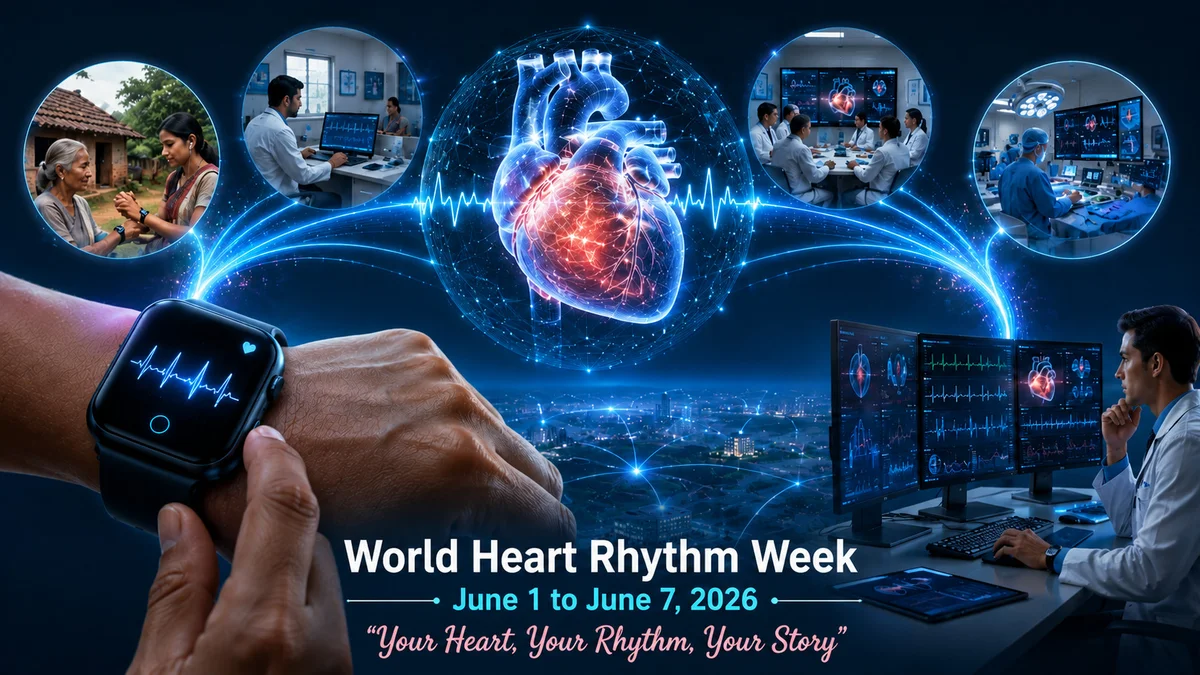
In observance of World Heart Rhythm Week 2026, the integration of consumer electronics into formal clinical telemonitoring networks is fundamentally redefining how we detect cardiac anomalies. Continuous passive monitoring is proving vastly superior to episodic clinical evaluations for catching hidden disease. Professional societies are recognizing the clinical utility of long-term biometric tracking for high-risk patient populations.
Standard ten-second clinical electrocardiograms provide only a brief snapshot of cardiac electrical activity, routinely missing paroxysmal atrial fibrillation that self-terminates between hospital appointments. Consumer wearables equipped with continuous photoplethysmography sensors provide a scalable, non-invasive method to close this monitoring gap. Definitive randomized validation for this digital approach was recently established by the multicenter EQUAL clinical trial published in the Journal of the American College of Cardiology.
The study evaluated the safety and efficacy of long-term wearable sensors by randomizing older adults at elevated risk of stroke to either six months of smartwatch monitoring or routine care. According to the published findings, new-onset atrial fibrillation was detected four times more frequently in the smartwatch group compared to standard clinical care. The vast majority of these newly uncovered cases were entirely asymptomatic or paroxysmal, identifying silent disease before a devastating stroke occurred.
Dr. Nicole J. van Steijn, a prominent clinical researcher at the Amsterdam University Medical Centre and first author of the EQUAL study, has advocated for embedding these consumer devices directly into medical networks. Her protocol utilized a specialized eHealth team to review every watch-triggered electrocardiogram within twenty-four hours to ensure prompt intervention. “Our findings demonstrate that prolonged screening is feasible, using a workflow-integrated smartwatch-based screening method to identify undiagnosed atrial fibrillation in patients at highest clinical risk," noted Dr. Nicole J. van Steijn of Amsterdam UMC.
Advanced artificial intelligence electrocardiogram algorithms can now analyze sinus rhythm traces to predict future arrhythmia development years before clinical onset occurs. Despite these profound clinical triumphs, a significant public health barrier persists because premium smartwatches remain financially out of reach for lower-income populations. Overcoming this economic divide requires the widespread deployment of low-cost, single-lead devices integrated with automated artificial intelligence interpretation.
Tags: Worldheartrhythmweek | Digitalhealth | Wearablemonitoring | Equaltrial | Jaccresearch | Artificialintelligence | Paroxysmalafib | Asymptomaticarrhythmia | Healthsocioeconomics | Preventivecardiology | Aiecg | Smartwatchscreening | Clinicalvalidation | Globalhealthdivide | Telemedicinecardiology | Therightdoctors |
Read More





Most Popular
Dr Chandrashekhar: Image Fat Depot Phenotypes | WCCKMM 2026
Overhauling Medical Curricula: What Doctors Say Must Change

Dr. Peter Schwarz Outlines IDF Strategies for Global Diabetes Crisis
Understanding Systemic Burnout and Policy Initiatives for Doctors

Dr V Mohan Outlines Precision Medicine to Subdivide Indian Diabetes

Putting AI to Work in Cardiovascular Care

The Twins Who Made Medical History — And the Nobel That Followed

Restructuring Macronutrient Ratios Checks Indian Diabetes
Powered by:
.png)
Awards & Recognitions:


Comments(0)