
Coronawar: The best way to curtail COVID-19 spread is to restrict contact: Dr. Hemant Thacker
Coronawar: The best way to curtail COVID-19 spread is to restrict contact: Dr. Hemant Thacker
Dr. Hemanth Thacker
Consulting Physician & CardioMetabolic Specialist
Breach Candy Hospital
UPDATED: Feb 23, 2021, 1:02:58 PM
Highlights
- Practitioners should always wear masks while treating COVID-19 patients.
- Not more than one relative should accompany a COVID-19 patient.
- Coronavirus affects only about 2% to 3% of people, especially those in vulnerable age and people with comorbidities.
- Patients with diabetes need to control their blood sugar level, increase immunity and adopt preventive measures to fight COVID-19.
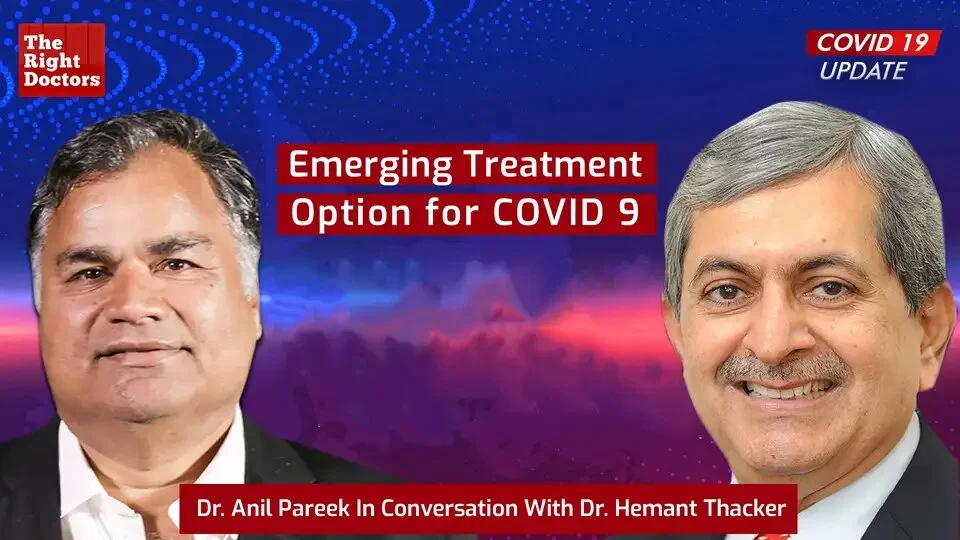
Dr. Anil Pareek has 30 years of professional experience in areas of clinical research, clinical practice, new drug development and academics. He is India's evangelist-in-chief for Hydroxychloroquine. He was instrumental in getting the first regulatory approval in the country for Hydroxychloroquine in Rheumatoid Arthritis patients. Hydroxychloroquine, a generic low-cost molecule was first approved by USFDA in 1955 and is emerging as a potential treatment option for COVID 19. Dr Anil Pareek spoke to Dr Hemant Thacker, a leading consulting physician in Mumbai and a specialist in cardio-metabolic and diabetes diseases. Dr Thacker has been the Principal Investigator for numerous international and national clinical trials.
Anil Pareek: What is your take on COVID-19 infection and how it is different from other viral epidemics like SARS and Ebola?
Hemant Thacker: It is a serious pandemic. We call it Corona because the bacterium has spicules on its head which resembles a crown, so coronation means crowning. The virus belongs to the Corona family which is extremely infective and lethal. Infective in the sense, one patient with this virus can infect up to ten people unlike the common influenza virus where one patient can infect two to five people.
It is a new virus and affects only about 2 to 3% of people, especially those in vulnerable age groups (75 plus) and people with comorbidities, renal failure, diabetes, malignancy. Since it is infective, the best way to curtail the spread is to restrict contact.
Anil Pareek: What do you mean by pandemic?
Hemant Thacker: The word ‘pan’ means all over and the epidemic of a pan nature is a pandemic. I am not trying to scare you but I am trying to caution you that this is significant; to be taken cognizance of. One has to follow precautions however silly or stupid it might seem. Sitting at home or not meeting people for 14 days is for our good because in society everything that we do wrongly will bounce back on us.
Anil Pareek: What is your advice to the practitioners for those patients who do not have any travel history and still they come with the symptoms? How should a practitioner deal with patients suffering from fever, cough, cold, throat pain?
Hemant Thacker: I restrict such kinds of patients from coming to my private clinic and I try to see them in hospital clinics. I am sure all the other consultants should see them at a clinic where there is a lot of space to follow the social distancing norm. I always wear a mask, because I am at risk. These patients when they come and make an appointment, they are also asked to wear a mask and there are plenty of sanitizers that I ask them to use. One more important thing is that not more than one relative should accompany a patient because that also helps in social distancing. Practitioners must treat the patients without travel history as if they have Coronavirus. Doctors must examine everybody though they may not send these people for testing. The ones with the high index of suspicion must be sent for testing.
Hemant Thacker: I restrict such kinds of patients from coming to my private clinic and I try to see them in hospital clinics. I am sure all the other consultants should see them at a clinic where there is a lot of space to follow the social distancing norm. I always wear a mask, because I am at risk. These patients when they come and make an appointment, they are also asked to wear a mask and there are plenty of sanitizers that I ask them to use. One more important thing is that not more than one relative should accompany a patient because that also helps in social distancing. Practitioners must treat the patients without travel history as if they have Coronavirus. Doctors must examine everybody though they may not send these people for testing. The ones with the high index of suspicion must be sent for testing.
Anil Pareek: What are the criteria to send a person for COVID-19 test?
Hemant Thacker: They must have severe symptoms or either a history of contact because of travel or contact with the patient in the building or the neighborhood. Just by travel history, I do not ask them to get any tests.
Anil Pareek: What is your advice to patients having uncontrolled diabetics?
Hemant Thacker: All patients with comorbidities should pull up their socks, control their blood pressure, look into their diabetes treatment, increase their immunity, see that they practice restrictions and keep their other diseases under check so that if they are attacked by coronavirus, they have only one enemy to fight.
Anil Pareek: What advice will you give to healthcare workers and people if they get in contact with a patient who is COVID-19 positive?
Hemant Thacker: The contacts should be isolated. If a husband has it, the wife should be isolated. If the kids are living with the COVID19 positive parents, they should be isolated. If patients are symptomatic, they have to be treated. If they are not symptomatic, we observe them and after 14 days they are okay.
Hemant Thacker: The contacts should be isolated. If a husband has it, the wife should be isolated. If the kids are living with the COVID19 positive parents, they should be isolated. If patients are symptomatic, they have to be treated. If they are not symptomatic, we observe them and after 14 days they are okay.
Anil Pareek: What is your take on the use of malaria drugs or anti-HIV drugs to treat COVID-19? If patients are symptomatic, they have to be treated. If they are not symptomatic, we observe them and after 14 days they are okay.
Hemant Thacker: Probably the only one drug that seems to work is the combination of either Chloroquine or hydroxychloroquine in combination with the anti-viral, either oseltamivir or group of anti –HIV treatment but nothing in the form of a protocol has been announced yet. If patients are symptomatic, they have to be treated. If they are not symptomatic, we observe them and after 14 days they are okay.
Hemant Thacker: Probably the only one drug that seems to work is the combination of either Chloroquine or hydroxychloroquine in combination with the anti-viral, either oseltamivir or group of anti –HIV treatment but nothing in the form of a protocol has been announced yet. These are clinical trials going on in different parts of the world. I would say wait and not give prophylaxis but if the patient is found to be positive with symptoms, I would try hydroxychloroquine or Chloroquine along with Oseltamivir or some other drug like that. If patients are symptomatic, they have to be treated. If they are not symptomatic, we observe them and after 14 days they are okay.
Anil Pareek: What is your advice to all the people concerned about COVID19?
Hemant Thacker: If we restrict now; if we lockout now; if we are not carefree now, stage three will be wrapped. 85% of people will not even know that they have coronavirus.
Read More





Most Popular

Dr. Pankaj Manoria on Post-MI Antiplatelet Therapy Selection

The Twins Who Made Medical History — And the Nobel That Followed
Incorporating Imaging Refines Risk in CKM Syndrome

What Nobody Tells You After a Lung Cancer Diagnosis
Dr. Chandra Sekhar

Dr V Mohan Outlines Precision Medicine to Subdivide Indian Diabetes

Dr. Peter Schwarz Outlines IDF Strategies for Global Diabetes Crisis

The Indispensable Role of SGLT2i in Heart Failure

Understanding Systemic Burnout and Policy Initiatives for Doctors
Powered by:
.png)
Awards & Recognitions:


Comments(0)