
Orthopedics: the past, the present and back to the past to deal with the COVID-19 era
Orthopedics: the past, the present and back to the past to deal with the COVID-19 era
Dr N Somasekhar Reddy
UPDATED: Feb 23, 2021, 1:41:28 PM
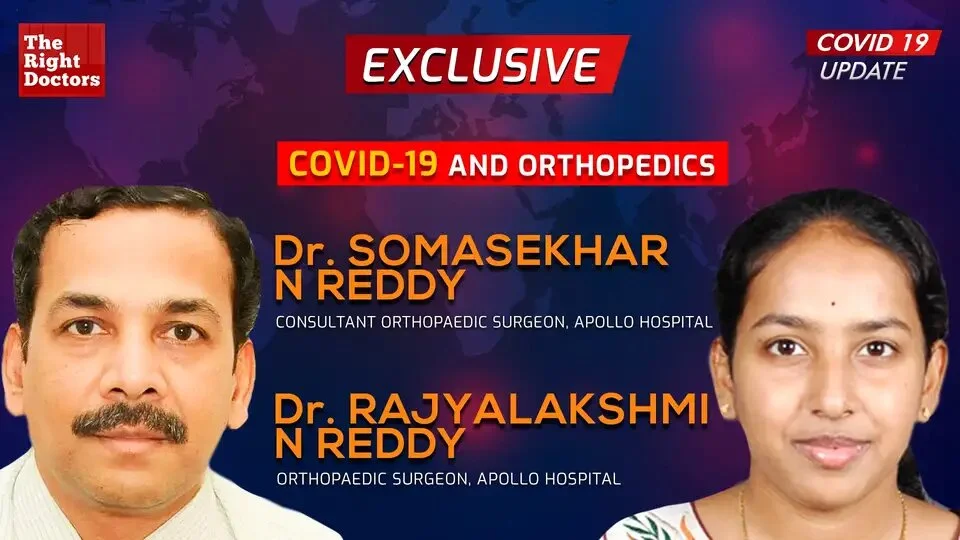
With the recent ongoing COVID19 pandemic of unfathomed size, unprecedented effects and unpredictable outcomes, we now stand at a very crucial juncture of our craft, being responsible to have to make decisions regarding fulfilling our obligations to our patients which will have an effect on our patients and their worlds, our staff and on us, our wellbeing and the world as we know it. This dilemma comes at a time where knowledge, skill, inventory and infrastructure have been leaping forwards, and then all of sudden our hands are tied and minds jolted to a stop to consider the unthinkable; taking a step back, to return and turn the pages back and use the old methods of orthopaedics, tried and tested no doubt, but which were cast aside due to the mesmerising and awe inspiring shiny new techniques and devices. So why am I becoming philosophical?
It’s because I was told to observe social distance from these so-called advanced versions of treatment.
Facts we know
Corona virus spreads by droplet infection. Faecal transmission has been documented and spread by blood transfusions is being suspected. The virus is active on fomites for up to 24-72 hours at room temperature and perhaps even longer in cooler or air-conditioned environments.
‘Pre symptomatic’ cases can transmit the infection from 2 days before showing symptoms and can remain infectious for varying length of time. Two consecutive samples testing negative for the virus is frighteningly not good enough, as there are reports stating the possibility of reactivation of the virus in these cured patients possibly rendering them infectious again. Adding to the risk are asymptomatic carriers
Testing centres are few and results take time to arrive, again with a possibility of false negatives in infected patients and the patients in incubation periods. Since it is mainly an aerosol carried infection it is feared that closed spaces with regulated ventilation like operating theatres increase the chance of transmission
Questions we must ask ourselves and the health care management in general
How essential is the surgery for the patient? Are there any alternatives? How were they managed in the past, a forgotten art for the youngsters? Is a minor deformity or small complication acceptable against the risk of a prolonged hospital stay, potential suffering and death? Did our seniors encounter some complications by not operating in those days? If so, how did they manage. Is that still relevant now rather than operating as we are used to now a days and landing in even bigger problems?
Operating patients with co-morbidities, more frequently leads to the patients requiring ICU care, which in the present circumstances can be a problem due to shortage of ICU beds. It increases chances of virus exposure.
How much risk is a Health Care Worker (HCW) and the whole team faced with if we take up a case for surgery? How are we placed in terms of resources to take all preventive measures (pretty expensive) and the availability of full gear of PPEs not just for HCW but also for the patient. Will the government allow routine testing of all patients prior to surgery?
Read | Impact of Stress on Health
Perhaps only an antibody test — which can tell if a doctor or a patient has had the virus and therefore has theoretically developed a degree of immunity — would be enormously helpful. HCW should work in shifts and get time off to isolate themselves to observe for any Corona symptoms. Overworking is detrimental not only to the HCW alone but to the entire health work force and community if there is spread. It is important to protect HCW manpower which is limited in number against the ongoing increase in the number of cases. We should not come to a point where there are no HCW’s to treat or operate patients in the ongoing pandemic.
Triaging the patients for possible Corona infection status, the severity of illness and the urgency level to perform surgery is of paramount importance to decide further action.
Triage: Based on severity of illness
• Urgent procedures
o High risk procedures
1. Proven positive case / no test result
2. Expected viral load of the area of surgery is high-aerodigestive tract, endoscopy, and open or laparoscopic surgery on the bowel with gross contamination
3. Aerosol-generating procedures (Most of the Orthopaedic surgeries)
o Low risk procedures
1. A negative RT-PCR test
2. Non aerosol generating procedures
• Elective: classified depending on how soon the operation needs to be performed
Read | Back Pain During COVID-19
The current guidelines dictate less time to be spent in the hospital with less movement in the hospital and among people. There is more emphasis on the conservative treatment of orthopaedic issues. The cases which are practically possible to be performed in the emergency room must be done there and discharged directly from there as soon as they are stable
The minor OT is a forgotten miracle room close to the casualty, where procedures ranging from soft tissue procedures like incision and drainage for abscesses, tendon repairs, nail removals and manipulations to bony procedures like K wire fixations, skeletal tractions and external fixation of fractures were performed. It gradually lost its pride to stricter hospital protocols, consent forms and newer techniques and facilities but may now be the need of the hour and rise to its former glory. The minor OT provides privacy and access to the necessary equipment. The hospital protocols like consent, sterilization protocols and PPE also apply here.
Only emergency surgeries which pose a threat to life and limb are to be taken up in the major OT. No elective cases are to be entertained. Separate areas and methods for donning and doffing of PPE, facilities, to shower after the procedure must be provided. Though to reduce the chances of infection within the theatre from staff to staff, staff to patient and patient to staff a negative pressure ventilation was suggested, it is practically detrimental for the success of any orthopaedic surgery which uses a metallic implant.
Cleanliness at the surgical wound is perhaps much better in an open car park compared to a negative pressure theatre (C Handley). Postoperatively patients must be monitored in wards for any surgical complications and also for any Corona related symptoms. Aim is for early stable discharge with instructions on home postoperative care and follow up instructions. A further safety measure is being introduced to keep all COVID positive patients in a separate hospital and if this is not possible at least to allocate a separate operation theatre and equipment to prevent cross contamination.
All fractures and dislocations must be splinted in a slab or brace after reduction with adequate instructions on the care, precautions and complications. Casts should be avoided as doctor’s supervision is not possible and there is no safe facility to remove the cast outside the hospital. For any surgeries performed local or regional anaesthesia is to be preferred.
Absorbable suture material must be used to save the patient another trip to the hospital. Appropriate counselling, instructions and medications must be explained to the patients with an emergency contact number for help when its required.tThe significance of informed consent for surgery is even more important as the patient who had surgery may have come to the hospital without any symptoms of COVID19 but was in incubation period. He may turn out to be positive in the post-operative stage and blame the hospital for the infection. Unfortunately, it is well proven in China that the recovery of the Corona positive patients following surgery is poor when compared to those without the infection.
Patients who want out patient appointments must take prior appointment so that hospitals can limit the number of patients at any given time in the hospital premises. To reduce the crowding at the hospitals, many are offering on-line appointments. Though the law is not very clear in this aspect, hospitals and doctors are willing to provide this service, and patients may only avail the service if they wish to with expressed consent. The on-line consultation offers the patient the advantage of getting the consultation within the comfort of their home and no additional chance of exposure to infection. But they should explicitly consent for possibly inadequate examination by the doctor. Patients should understand the limitations of a telephonic or video consultation with respect to diagnostic and therapeutic accuracies.
With the rapidly changing situations the government is revising the guidelines which may change the treatment protocols.
Orthopedics: the past, the present and back to the past to deal with the COVID-19 era
Tags: Orthopedics Dr Somasekhar Dr Rajyalakshmi Facts |
Most Popular
What Nobody Tells You After a Lung Cancer Diagnosis
Dr. Chandra Sekhar

The Indispensable Role of SGLT2i in Heart Failure

Dr V Mohan Outlines Precision Medicine to Subdivide Indian Diabetes

Dr. Peter Schwarz Outlines IDF Strategies for Global Diabetes Crisis

Dr. Enas A. Enas: Targeted Screening Essential to Stop Early Indian CA
More From TheRightDoctors

7 FDA Lung Cancer Approvals in 24 Months Every Doctor Should Know
Dr. Chandra Sekhar
Dr Chandrashekhar: Image Fat Depot Phenotypes | WCCKMM 2026
Addressing Healthcare Barriers on World Hepatitis Day 2026

The Twins Who Made Medical History — And the Nobel That Followed
Trending

Restructuring Macronutrient Ratios Checks Indian Diabetes

Role of telemedicine in COVID-19 pandemic
Dr Hardeep Kaur Grewal

Vitamin D Supplementation in Patients with Diabetic Retinopathy
Prof. Sandeep Saxena

COVID-19: Effects on the Gastrointestinal Tract & Liver
Dr. Rajesh Upadhyay