Jul 18, 2026
42 Million Indians Have Thyroid Disease. Most Don't Know It.
42 Million Indians Have Thyroid Disease. Most Don't Know It.
Dr Chandra Sekhar
UPDATED: May 25, 2026, 6:24:23 PM
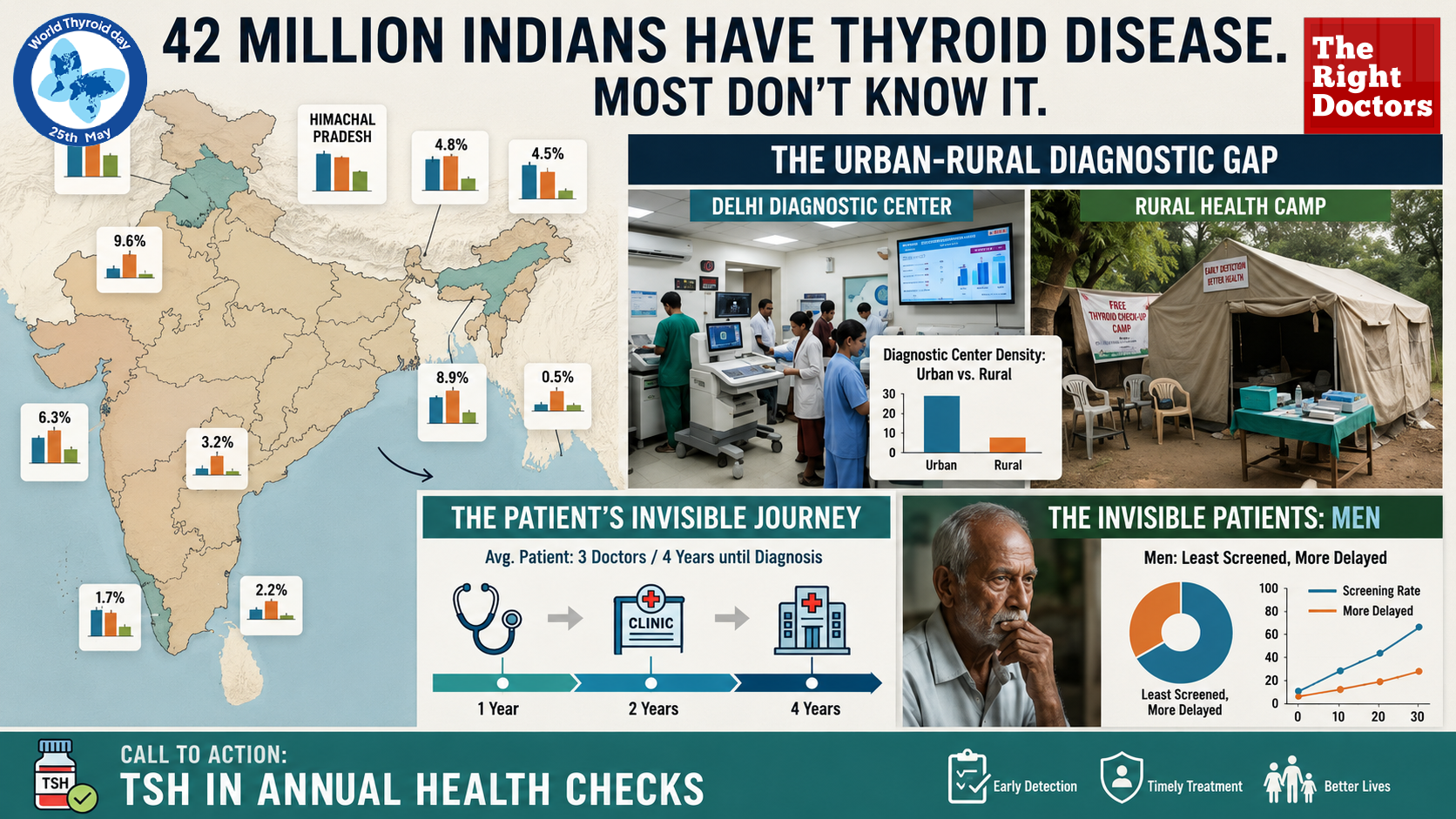
There is a number that should be on the front page of every newspaper in India today. Not because it is new. Because it has been sitting quietly in the data for years while we looked elsewhere.
42 million Indians have thyroid disease.
That is more than the entire population of California. More than the combined populations of Mumbai and Delhi. It is one of the largest chronic disease burdens in the country — and it is almost entirely invisible in public health policy, research funding, and media coverage.
Today is World Thyroid Day. The number deserves more than a mention.
What the Data Actually Shows:
The ICMR-INDIAB study puts the national prevalence of adult hypothyroidism at 10.95%. That means roughly one in ten Indian adults has an underactive thyroid. In some states the numbers are significantly higher.
The Northeast, historically iodine-depleted due to soil composition, carries a disproportionate burden. Himalayan belt states show elevated rates of goitre and thyroid dysfunction that trace directly to decades of iodine-deficient soil and, increasingly, to populations switching away from iodized salt.
Autoimmune thyroid disease — specifically Hashimoto's thyroiditis — is rising in urban India. The drivers include genetic susceptibility, environmental triggers, vitamin D deficiency, and disruptions to iodine status from dietary changes.
Thyroid cancer incidence is rising in India's population-based cancer registries, particularly in Kerala, Delhi, and Mumbai. The rise is partly real and partly an artifact of better detection.
Read | Back Pain During COVID-19
The Diagnostic Gap Nobody Talks About:
A TSH test costs under Rs. 200 at most accredited laboratories in India. It requires a small blood draw. The result is available within hours.
There is no simpler, cheaper, or more actionable screening test for any chronic condition of comparable prevalence.
And yet the majority of thyroid disease in India goes undiagnosed.
In rural India the barrier is clinical suspicion. A woman presenting with fatigue, weight gain, constipation, hair loss, and low mood is far more likely to be treated for anaemia or depression than to have her thyroid checked.
In urban India the barrier is different. Educated, insured patients with access to good healthcare are still waiting years for a correct diagnosis — not because tests are unavailable but because the condition is under-recognised.
The average Indian patient with hypothyroidism sees three physicians over four years before receiving a correct diagnosis.
During those four years they may be treated for depression, chronic fatigue, obesity, anaemia, and anxiety — all of which are thyroid disease presenting through its most visible symptoms.
Four years. Three physicians. One TSH test that was never ordered.
The Men Nobody Is Talking About:
Thyroid disease affects women at five to eight times the rate of men. That statistical dominance has produced a public awareness landscape that is almost entirely female.
Men with thyroid disease are essentially invisible.
A man presenting with fatigue, weight gain, low testosterone, erectile dysfunction, and depression is being investigated for everything except his thyroid. He gets a testosterone panel. He gets referred to a psychiatrist. He gets lifestyle advice. His TSH is not checked.
The connection between hypothyroidism and low testosterone in men is real and well-documented. An unknown number of men currently on testosterone replacement therapy have undiagnosed hypothyroidism driving their low testosterone — and are being treated for the symptom while the cause sits unaddressed.
The awareness gap is not only costing men a diagnosis. In some cases it is costing them their lives.
What Needs to Change:
TSH must become a standard component of routine annual health checks in India for adults over 30. It must be a mandatory first-trimester test in every antenatal care protocol in the country.
The cost of universal antenatal TSH screening is trivial against the cost of undetected hypothyroidism in pregnancy — measured in the cognitive development of children who will spend the next 80 years living with a deficit that a Rs. 200 test could have prevented.
General practitioners need better training for recognising thyroid disease in atypical presentations — in men, in the elderly, in patients whose primary complaint is psychiatric rather than physical.
And India needs a public awareness campaign about thyroid disease that speaks to men. Not as caregivers of women with thyroid disease. As patients. 42 million Indians have thyroid disease.
On World Thyroid Day, that number is the starting point — not the headline.
The headline is how many of them do not know it yet, and what we intend to do about that.
------------------------------------------------------------
Dr. Chandra Sekhar is the Founder, CEO, and Editor-in-Chief of TheRightDoctors.
42 Million Indians Have Thyroid Disease. Most Don't Know It.
Most Popular
Dr. Peter Schwarz Outlines IDF Strategies for Global Diabetes Crisis
Dr Chandrashekhar: Image Fat Depot Phenotypes | WCCKMM 2026
Dr. Dorairaj Prabhakaran on Harnessing AI for Cardiovascular Care
Dr. Enas A. Enas: Targeted Screening Essential to Stop Early Indian CA
Restructuring Macronutrient Ratios Checks Indian Diabetes
More From TheRightDoctors
Incorporating Imaging Refines Risk in CKM Syndrome
The Indispensable Role of SGLT2i in Heart Failure
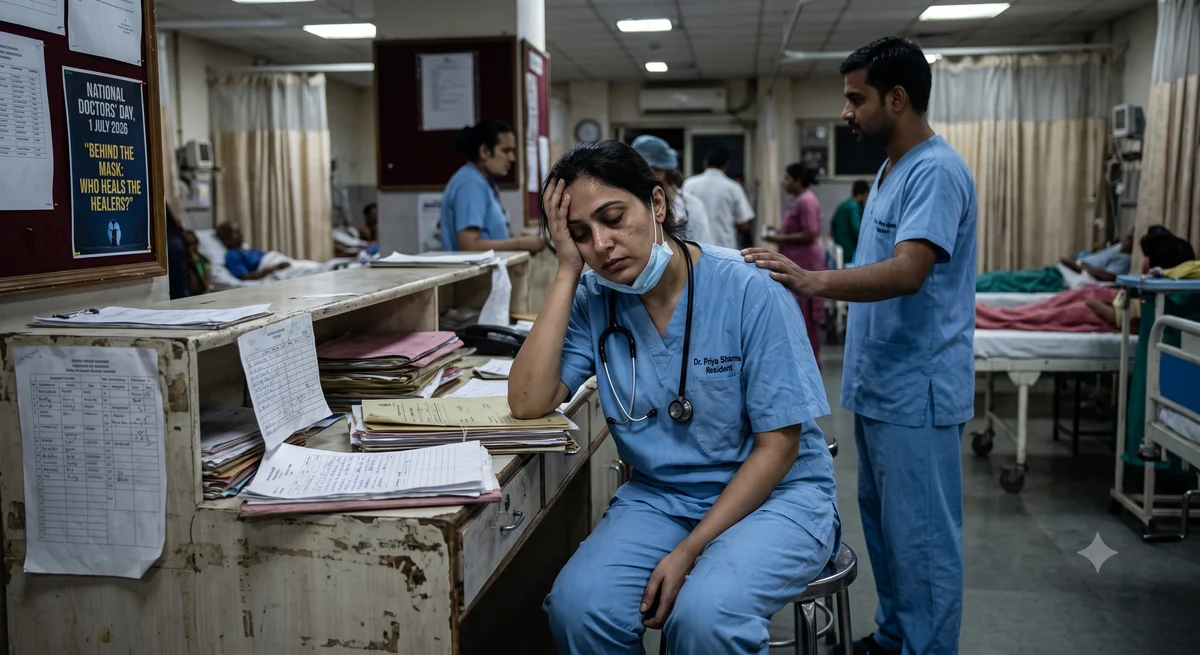
Understanding Systemic Burnout and Policy Initiatives for Doctors
Dr V Mohan Outlines Precision Medicine to Subdivide Indian Diabetes
Trending
Dr. Pankaj Manoria on Post-MI Antiplatelet Therapy Selection

Orthopedics: the past, the present and back to the past to deal with the COVID-19 era
Dr N Somasekhar Reddy

Challenges of Medical Education in India
Prof. Dr. Vitull K. Gupta
Role of telemedicine in COVID-19 pandemic
Dr Hardeep Kaur Grewal